Fact Check
Read the Label: What Erborian's BB Crème Au Ginseng SPF 20 Actually Promises
Erborian's BB cream lists SPF 20 and ginseng on the front; the ingredient panel shows one claim is regulator-tested and the other is present but far below research-strength doses.
Published
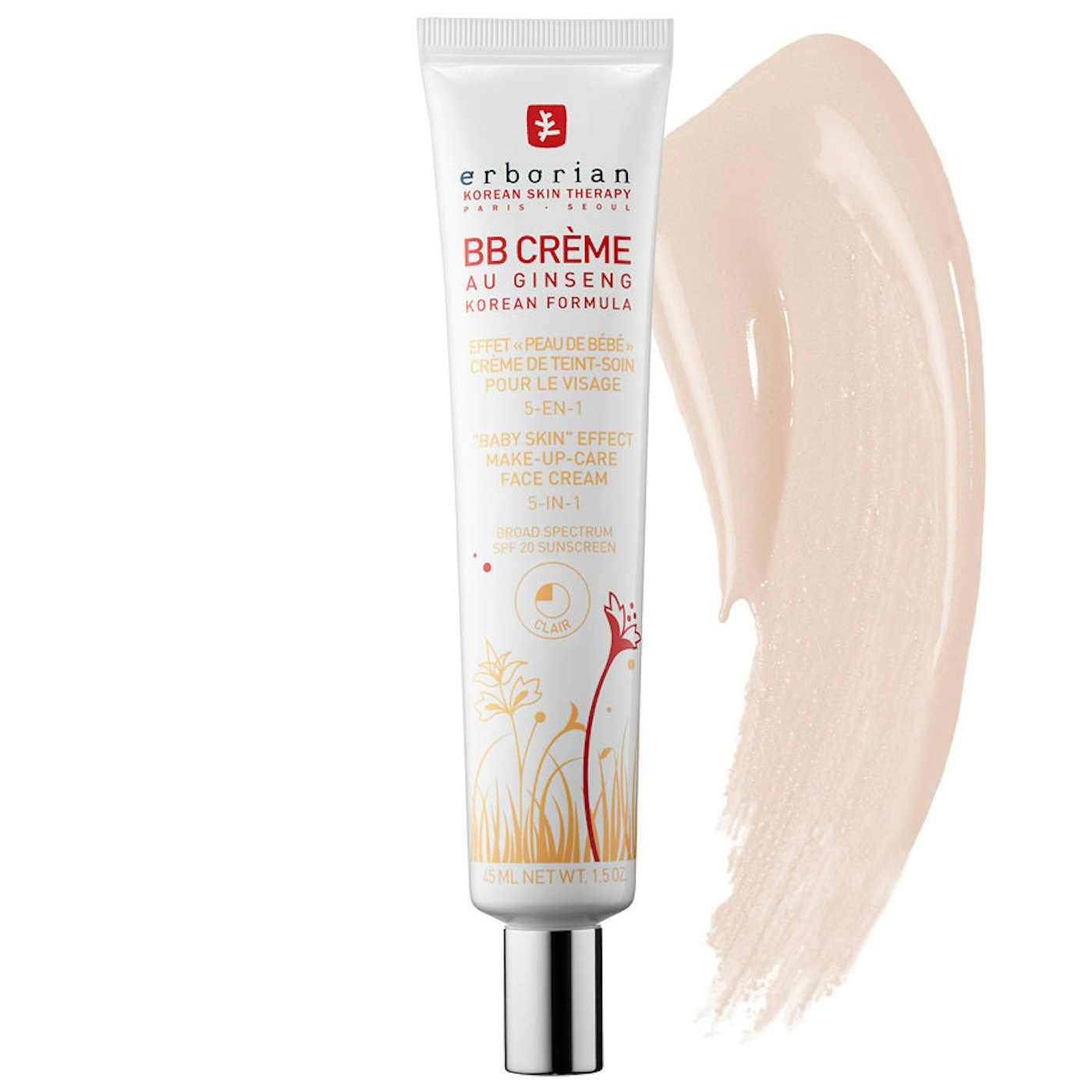
Erborian's BB Crème Au Ginseng promises SPF 20 and a ginseng-infused glow, and the ingredient list backs up the first claim more directly than the second. Cosmetics & Toiletries built its "Read the Label" column around exactly this gap: what the panel of actives on the back of the tube is actually doing versus what the front of the tube implies.
The sunscreen claim checks out on paper. Independent INCI listings (via IncideCoder and the EWG database) show the formula leaning on titanium dioxide and zinc oxide, the two mineral filters, alongside butyloctyl salicylate, an organic UV filter. That combination is standard in France and Korea, the two countries where Erborian was built, since Symbiose Cosmetics launched the brand there under founders Katalin Berenyi and Hojung Lee. It would not clear the same bar in the United States. The FDA's own 2021 proposed sunscreen rule recognizes only zinc oxide and titanium dioxide as generally recognized as safe and effective among active filters; the agency has not approved a new UV filter in over two decades, while regulators in the EU and Korea have kept moving. Butyloctyl salicylate is legal in cosmetics here, but a product built around it could not be marketed as an FDA-monograph sunscreen the way it is sold as one in Europe. The label's SPF 20 is a real, tested number; the regulatory shelf it sits on is not universal.
Ginseng is the other name doing work on the label, and here the label is being more careful than a casual reader might assume. Panax Ginseng Root Extract does appear in the formula, and it is not pure decoration: the Cosmetic Ingredient Review panel has evaluated ginseng extracts and found them broadly safe for use, and a growing body of in vitro research on ginsenosides points to antioxidant and anti-inflammatory activity, with some signals for collagen support. But that research is conducted at concentrations far above what a cosmetic formula uses. In Erborian's BB cream, ginseng extract sits well down an ingredient list topped by water, dimethicone, caprylic/capric triglyceride and isononyl isononanoate, the silicone-and-emollient base that gives BB creams their blurred, second-skin finish. The extract is there; whether it's there at a dose that does anything meaningful on skin is a separate question the label doesn't answer, and can't be expected to.
That's the honest reading of a BB cream label generally: the SPF number is a measured, regulated claim, and the botanical name is a permitted, present, but functionally modest one. Erborian's marketing leans on both being the same kind of promise. The formula sheet says otherwise. Also worth a beat: the word "BB" itself traveled a longer road than the ginseng did. The format originated with a West German dermatologist, Christine Schrammek, who developed a "blemish balm" for post-procedure patients in the 1960s, decades before it became a Korean beauty staple and, later, a French-marketed export.