Roundup
Kaolin Clay Mask Guide: SKIN1004's Formula and Directions
SKIN1004's Poremizing Quick Clay Stick Mask (27g, USD 19.80) is a stick-format kaolin and centella asiatica clay mask with a documented 3 to 5 minute rinse-off window. Here is what that disclosed formula and those directions can realistically do, set beside three other kaolin clay masks on the market.
Published
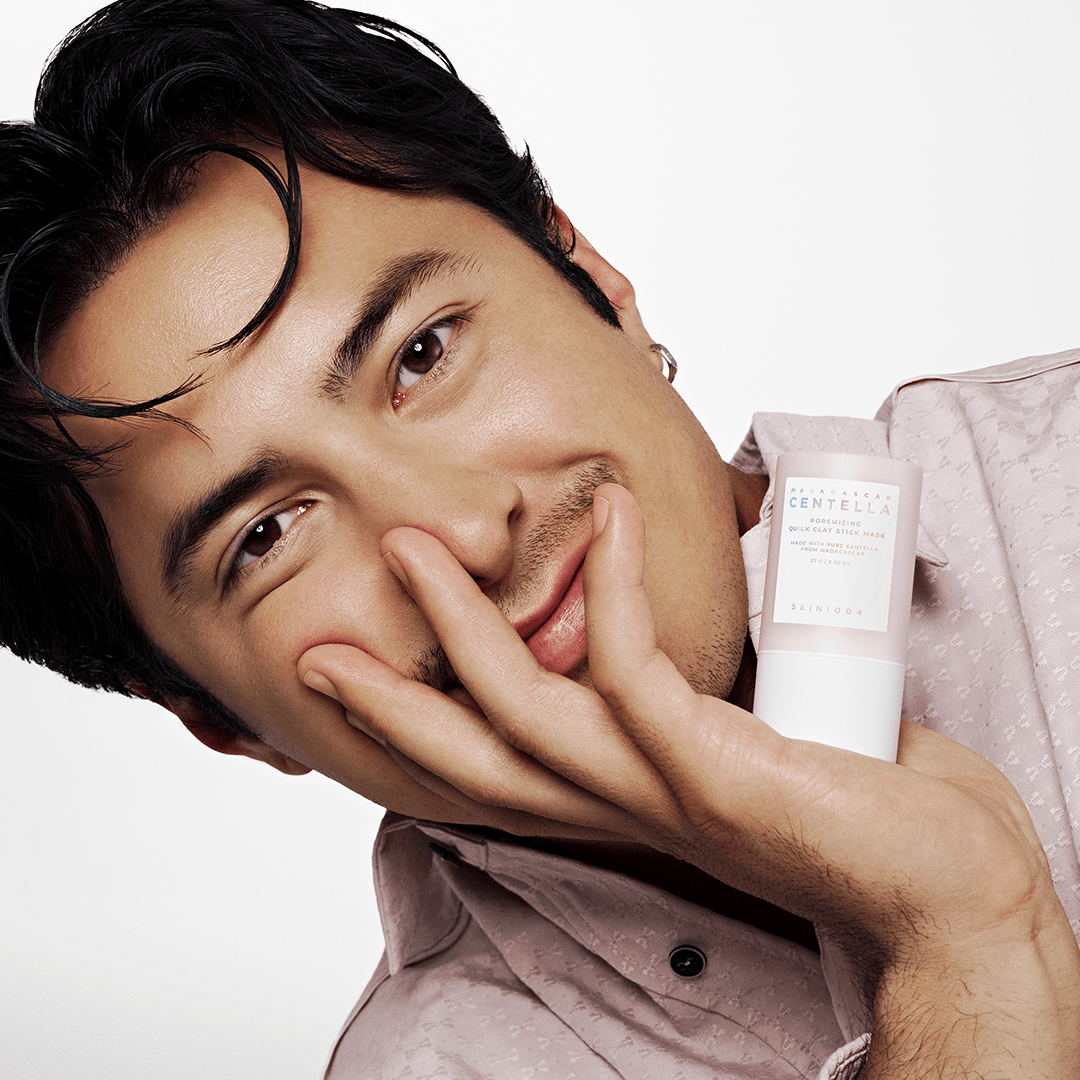
SKIN1004's Poremizing Quick Clay Stick Mask (27g, USD 19.80, checked 2026-09-26) is a stick-format kaolin mask built on a maker-disclosed five-clay system, and it answers the question of what a kaolin clay mask can do by keeping its claim small: a short, timed clay contact meant to pull oil off the skin's surface, not a permanent change to pore size. The deciding axis for any kaolin mask, including this one, is how long the clay sits on the skin before rinsing, because that window is what separates a temporary sebum-absorption step from an exfoliating or medicated treatment. SKIN1004's own English directions cap that window at 3 to 5 minutes, rinsed off with lukewarm water, which keeps the product in the oil-absorption category, not the leave-on or acid-exfoliant category occupied by some other kaolin masks on shelves right now. Centella Asiatica Extract sits inside that same clay base, so the ingredient a reader is asking about and the clay doing the absorbing are delivered in one 3 to 5 minute step instead of two separate products.
SKIN1004 Poremizing Quick Clay Stick Mask 27g
SKIN1004 Poremizing Quick Clay Stick Mask 27g sells for USD 19.80 on the brand's own store, checked 2026-09-26, and it ships as a solid stick instead of a jar that needs a spatula or clean fingers. The clay and formula context starts with Kaolin, which SKIN1004 states at 18% among five clays in the same base, alongside Bentonite and Centella Asiatica Extract. Officially listed skin types are oily, normal and combination, which matches a clay base built to pull surface oil, not to exfoliate or medicate.
The documented directions are short by design: SKIN1004's English-language product page says to apply after cleansing, avoid the eyes and mouth, and rinse with lukewarm water after 3 to 5 minutes, while the brand's own Korean usage guide widens that window to 5 to 10 minutes at 1 to 2 times a week. How long the clay sits on the skin before rinsing is the axis that decides what any kaolin mask can do, and SKIN1004 settles it on the shorter end: a few minutes of surface contact is long enough for a clay and mineral base to draw up sebum and short of the time it would take to meaningfully resurface or treat skin. That is why the stick is positioned as an occasional pore and oil step, not a leave-on treatment, a cleanser replacement, or a once-daily habit.
A reader with oily or combination skin asking whether a centella asiatica mask is worth adding to a routine is the fit this stick answers directly: Centella Asiatica Extract sits in the same layer as the kaolin and bentonite, so the soothing extract and the oil-absorbing clay arrive in one 3 to 5 minute step instead of two separate products, and the no-mix stick reaches the nose, chin or forehead without stirring a jar first. The mask is sold through SKIN1004's own store and through Olive Young US, and the brand's centella clay mask listing lists the full ingredient panel for anyone checking it against a Philippines FDA cosmetic notification, NN-1000013243383, filed on the product in 2024.
- The stick applies to clean, dry skin without mixing a powder or scooping from a jar, so sebum-prone areas get coverage in seconds.
- A 3 to 5 minute rinse-off window fits inside an ordinary evening cleansing routine without extending it.
- Kaolin and Centella Asiatica Extract sit in the same stick, so the clay step and the soothing extract land in one layer instead of two products.
- Used once or twice a week instead of daily, the mask stays an occasional treatment step instead of a habit that could pull too much moisture from the skin barrier.
Taken together, the disclosed clay percentage, the short timed contact, and the stick's no-mix application mean the realistic outcome is a brief reduction in surface shine and visible pore fill right after rinsing, repeated 1 to 2 times a week, which is the outcome a kaolin-based formula with these directions is built to deliver.
What Kaolin, Bentonite and Centella Asiatica Actually Do in a Clay Mask
Kaolin is a mild, absorbent clay that draws oil and sits on top of skin instead of sinking into it, which is why kaolin-based masks get rinsed off rather than left on overnight. Bentonite and the other clays named in SKIN1004's INCI, Illite and Montmorillonite, work on the same absorption principle, so a five-clay blend like the one in the Poremizing Quick Clay Stick Mask is stacking several absorbent minerals instead of relying on one. Centella Asiatica Extract is not a clay; it is the plant extract a reader asking about a centella mask is usually asking about, and in this formula it sits inside the same clay base, not in a separate serum step.
None of that chemistry changes pore size permanently. A pore's visible width is mostly set by the amount of oil and dead skin inside it at a given moment, so when a clay mask absorbs surface sebum during its rinse window, pores can look smaller right after rinsing because they are less full, not because the opening itself has shrunk. That distinction matters for anyone asking whether a centella asiatica mask actually works: it can measurably change how oily and how visually tight skin looks for a few hours after use, within the limits of what a short clay contact is able to remove.
What a kaolin mask cannot do, based on its own documented directions, is replace an exfoliating acid or a medicated treatment. A plain kaolin and bentonite mask carries no disclosed percentage for an active like salicylic or glycolic acid, so any blackhead-clearing or breakout-calming effect it produces comes from oil absorption and mild surface cleansing, not from a chemical exfoliant doing separate work.
How Long a Kaolin Mask Should Sit, and How Often
Every kaolin clay mask ties its outcome to a timed contact window, and that window is short on purpose. SKIN1004's own directions cap the Poremizing Quick Clay Stick Mask at 3 to 5 minutes in the brand's English-language instructions, extending to 5 to 10 minutes in its Korean usage guide, with both versions capping frequency at 1 to 2 times a week rather than daily use.
Leaving any kaolin or bentonite mask on well past its stated window, until the clay fully hardens, cracks and starts to flake off on its own, pulls more water out of the skin than a timed 3 to 10 minute contact is designed to remove, which is the over-drying complaint that shows up in reviews of clay masks generally. Rinsing while the clay is still slightly damp, as SKIN1004's Korean guide specifically instructs for sensitive skin, keeps the treatment inside its intended absorption window instead of tipping it into a drying one.
Frequency matters as much as duration. A clay mask used once or twice a week gives the skin barrier time to recover sebum and moisture between treatments, which is why the brand's own guidance repeats that cadence instead of recommending daily use; a mask applied every day would be working against the same oil layer the skin needs to stay comfortable.
Where a Short-Contact Clay Step Fits in a Routine
A kaolin mask with a 3 to 10 minute rinse-off window sits after cleansing and before the rest of a routine, not in place of either step. Skin should be clean before the clay goes on, since any mask applied over leftover makeup or sunscreen ends up absorbing that residue instead of surface oil, and skin should be rinsed and, where directions call for it, lightly toned or moisturized afterward, since a clay treatment alone leaves nothing behind to hold moisture in.
Placed weekly or twice-weekly instead of nightly, a stick-format clay treatment like SKIN1004's slots into a routine the same way a weekly deep-clean slots into a cleaning schedule: it is the occasional, targeted step, with daily cleansing and moisturizing carrying the routine on the other five or six days.
For a reader comparing several kaolin options at once, the clay and formula context, the documented minutes-per-use, and the stated skin type on each product's own page are the three facts worth lining up side by side, since those are the facts each brand actually discloses, not a sebum-reduction percentage that is rarely published by the maker itself.
Other kaolin-based masks sit in the same category but disclose different things. Kiehl's Rare Earth Deep Pore Cleansing Mask states a 90% hydro-activated clay blend of Amazonian white clay (kaolin) and bentonite plus allantoin, without a percentage for either clay, and Ulta's own displayed "Most Helpful Critical Review" calls the dried-down mask very drying. Innisfree Super Volcanic Pore Clay Mask lists volcanic ash, bentonite, kaolin and walnut shell powder with no disclosed concentrations, and the brand's own product page warns that its posted ingredient list may not match the current package; its Philippines FDA cosmetic notification, NN-1000011680610, expired June 6, 2026. The Ordinary Salicylic Acid 2% Masque names only its 2% salicylic acid concentration, leaving kaolin and charcoal powder undisclosed, and its own directions exclude sensitive, peeling or compromised skin and require a three-day patch test before use.
| Product | Clay and formula context | Documented use directions | Best routine fit |
|---|---|---|---|
| SKIN1004 Poremizing Quick Clay Stick Mask 27g | Kaolin, Bentonite, Illite and Montmorillonite with Centella Asiatica Extract; brand states 18% kaolin among five clays plus red bean (Phaseolus Angularis) seed powder | Apply after cleansing, avoid eyes/mouth, rinse after 3-5 minutes (English page); Korean guide lists 5-10 minutes, 1-2x weekly | Oily, normal and combination skin wanting a no-mix stick sebum step 1-2x weekly |
| Kiehl's Rare Earth Deep Pore Cleansing Mask | 90% Hydro-Activated Clay Blend of Amazonian White Clay (kaolin) and bentonite plus allantoin; no individual clay percentages disclosed | Official page states ~10 minutes dry, 2-3x weekly; same page's FAQ separately states 5-10 minutes, 1-2x weekly | Jar-applied, listed normal-to-oily on Ulta; Ulta's top-voted critical review calls it very drying |
| Innisfree Super Volcanic Pore Clay Mask | Volcanic Ash, Bentonite, Kaolin, Walnut Shell Powder, Lactic Acid; no concentrations disclosed and brand notes online INCI may not match package | - | Jar format spec-labeled Combination/Oily; Philippines FDA notification NN-1000011680610 expired June 6, 2026 |
| The Ordinary Salicylic Acid 2% Masque | Kaolin and Charcoal Powder carry 2% Salicylic Acid; kaolin and charcoal concentrations not disclosed | - | 50ml/100ml only, positioned for oily skin, no larger format offered |