Microdermabrasion Has a Legal Definition. Facial Doesn't.
Microdermabrasion sits inside an FDA device classification with an effect clinical studies measure in microns of skin removed, while facial has no such definition: what a provider can legally do inside one is set state by state, which is why the two were never comparable at the same level to begin with.
Published · Updated
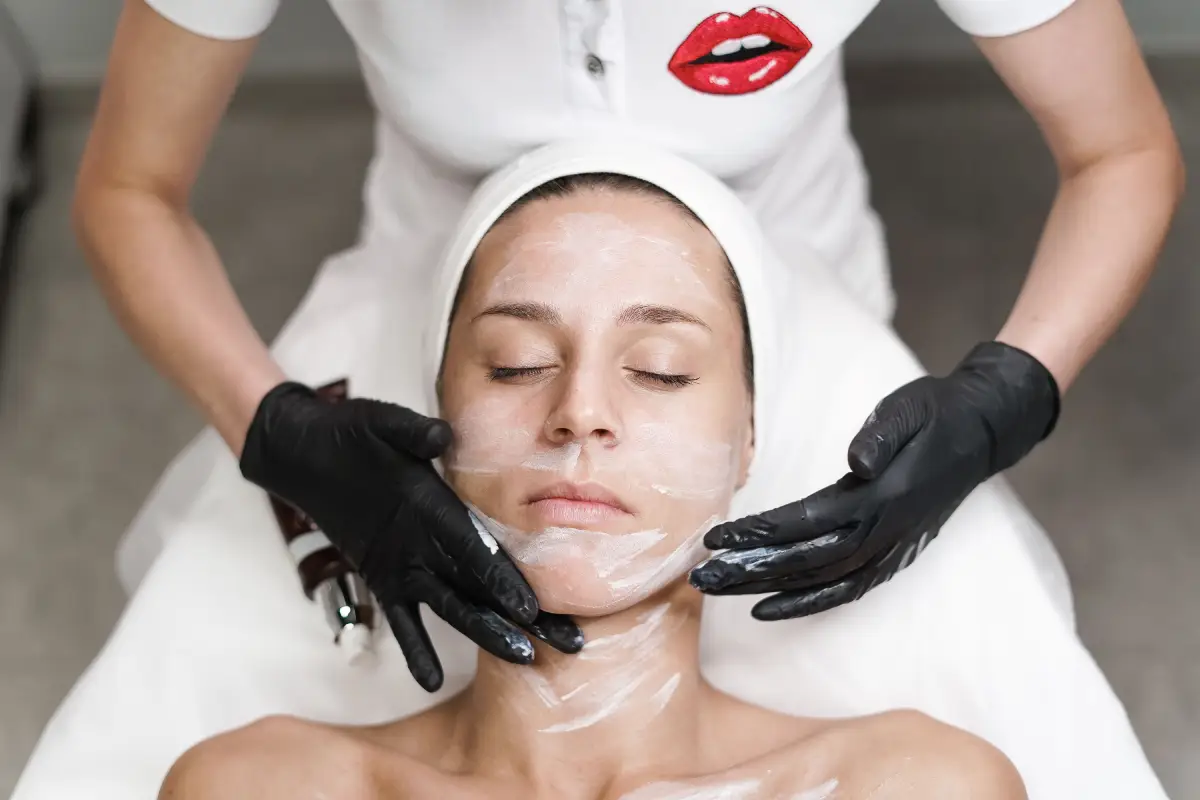
The question "microdermabrasion or facial" sounds like it has a clean answer, the kind you could settle with a stopwatch and a lighted mirror. It doesn't, and the reason isn't just that "facial" is a catch-all term. It's that the two sides of the comparison are defined at completely different levels: one by federal device regulation and a peer-reviewed micron count, the other by whatever a state's cosmetology board happens to allow that year.
One side of this comparison has a regulation number
Microdermabrasion machines, the crystal-spray and diamond-tip wands used in spas, dermatology offices, and med spas, fall under the FDA's dermabrasion device rules in 21 CFR Part 878, the agency's general and plastic surgery device regulations. Most sit in Class I, the lowest of the FDA's three risk tiers, which mostly exempts them from the agency's standard premarket review. That's a narrower claim than it sounds: Class I status means the device met basic manufacturing and labeling controls, not that the FDA independently tested whether a given machine improves skin. When a spa's marketing describes its equipment as "FDA-cleared," that's usually true, and it usually says less than it implies.
What the machine actually removes, in microns
Because it's a device with a defined mechanical action, researchers can measure what microdermabrasion does to skin with more precision than "facial" allows. Histology studies of crystal handpieces put each pass at roughly 10 to 15 microns of tissue removed. The stratum corneum, the dead outer layer being targeted, runs about 17 microns thick on the cheek and closer to 30 microns on coarser skin like the back of the hand. Two passes are generally enough to clear it; four start to reach the stratum granulosum, the live layer just beneath. A 2024 imaging study using diamond-tip devices found early increases in dermal collagen density after a single session, though that finding comes from one study using confocal imaging, not a settled result.
The clinical literature on outcomes is more measured than the marketing around it. Evidence reviews describe consistent, modest improvement in surface texture and mottled pigmentation, with mild to moderate results on acne scarring specifically, and note that the effect is smaller and shorter lived than what chemical peels, microneedling, or fractional lasers can produce for scarring. Microdermabrasion's advantage isn't power, it's control: because the depth is set by the number of passes rather than a chemical reaction running its own course, an operator can stop before reaching live tissue in a way that's harder to guarantee with a peel.
The word "faster" hides a similar mismatch. Skin looks brighter within hours of either treatment because the process is mechanically stimulating: suction and light abrasion increase local blood flow and clear away the top layer of dulling, dead cells that were already due to shed. That's a real, immediate, visible change, and it's also not the same thing as the slower remodeling, in collagen density or pigment distribution, that the same studies describe as needing repeat sessions spaced weeks apart to show up reliably. A single light pass and a four-pass session can produce the same next-morning glow while doing very different amounts of work underneath it.
"Facial" has no such definition
Nothing above applies to "facial," because a facial isn't a device or a treatment category the FDA regulates at all. It's a service, and what a given provider is legally permitted to do inside that service is decided by a state cosmetology or esthetics board, not a federal agency, and the answer changes by state. California's esthetician scope bars medium grade or medical grade exfoliants and reserves anything that reaches into live tissue for a physician. Connecticut, by contrast, folds diamond and crystal microdermabrasion directly into ordinary esthetic services. The dividing line that shows up across states isn't the word "facial" versus the word "microdermabrasion," it's whether the treatment crosses into the dermis: cross that line and, in most jurisdictions, the work has to be performed or delegated by a physician, regardless of what the treatment is called on the menu.
That means a "facial" booked in one state can legally include the same diamond-tip wand, at the same depth, as a treatment billed as "microdermabrasion" two states over. And a treatment sold as microdermabrasion at a walk-in spa may be a single light pass that barely touches the stratum corneum, nowhere near the four-pass version a dermatology office might use to reach the stratum granulosum. The category name on the price list carries almost no information about which of those you're actually getting.
What the question should actually be
Given that, "which one clears skin faster" is underspecified in a way no amount of side-by-side testing fixes, because "microdermabrasion" and "facial" aren't parallel categories to begin with. A more answerable version of the question replaces the treatment name with three things that actually vary: how many passes or how deep the exfoliation goes, what device is doing it, and who is licensed to perform that specific depth in that specific state. Those are the variables the histology studies and the scope of practice rules actually track, and they're the ones a provider should be able to answer directly before a treatment starts.
- How many passes, or how many minutes of active exfoliation, is the session actually using
- Is the device crystal-spray or diamond-tip, and is it staying at the stratum corneum or advancing toward it
- What license does the provider hold, and does this state require a physician to delegate anything beyond that depth
It's also worth asking who shouldn't be on the table for either option, regardless of pass count. Clinical guidance lists active herpes simplex or varicella zoster lesions as a firm contraindication for microdermabrasion, and flags a personal history of keloid scarring and visible rosacea or telangiectasia as reasons for a provider to slow down or choose a gentler setting rather than proceed as usual. None of that caution is specific to the word "microdermabrasion" either: a facial that includes the same crystal or diamond-tip pass carries the same risk, because the skin doesn't know what the treatment is called.
The honest version of "which clears skin faster" isn't a verdict between two treatment types. It's a smaller, more useful question: how many microns is this session actually removing, and is the person doing it licensed to go that deep. Ask that, and the category label on the appointment stops mattering much at all.
Sources: Microdermabrasion, StatPearls (NIH)