Hello Bello's Baby and Kids SPF 50 Labels Match
Hello Bello's current Baby and Kids Mineral Sunscreen Lotions SPF 50 list 23% zinc oxide and the same inactive ingredients. The age words distinguish their presentation, not the formulas disclosed on their labels.
Published · Updated
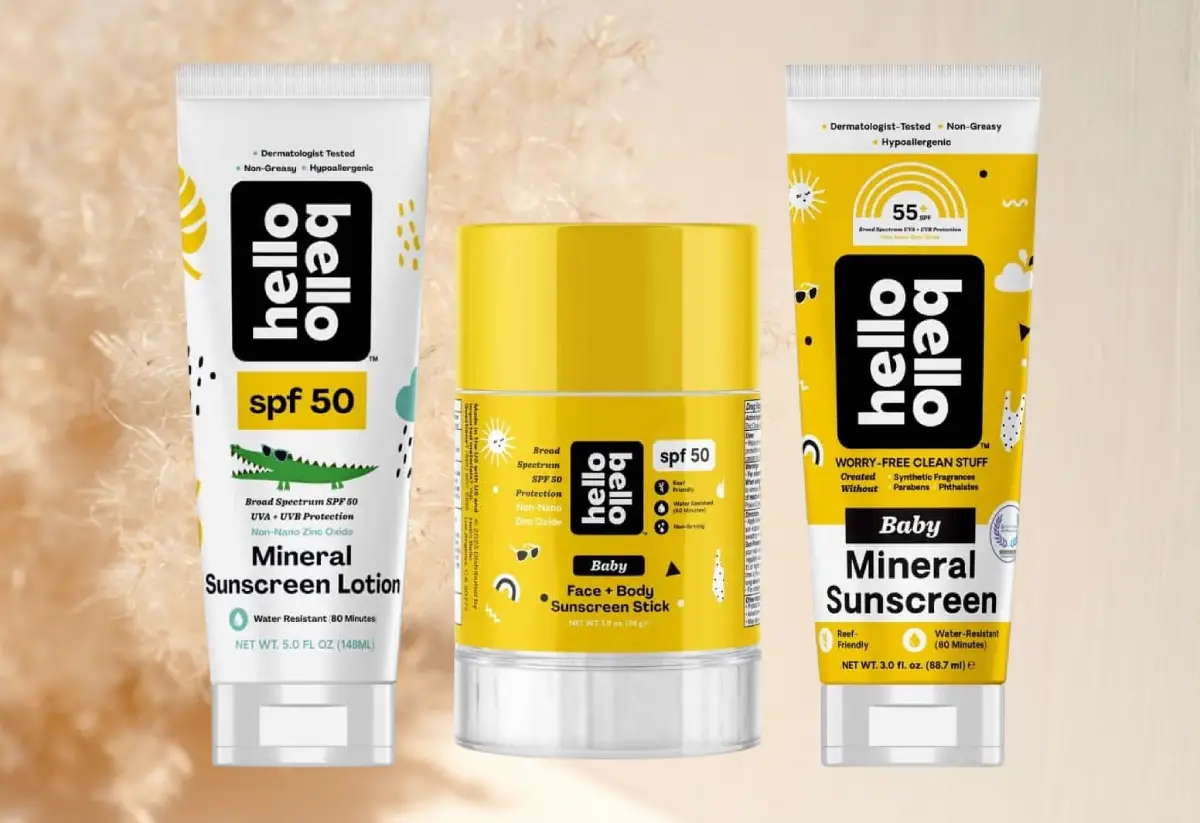
Hello Bello presents its Baby Mineral Sunscreen Lotion SPF 50 and Kids Mineral Sunscreen Lotion SPF 50 as separate choices. Their current label records tell a simpler story: both list 23% zinc oxide as the sunscreen active, the same inactive ingredients, broad-spectrum SPF 50 protection, and 80 minutes of water resistance.
That does not prove every production detail is identical. Inactive ingredient percentages and manufacturing instructions are not disclosed. It does mean the public ingredient records provide no formula-based reason to expect the baby lotion to behave differently from the kids lotion. Here, the words on the front are doing more sorting than the Drug Facts panel.
The ingredient records line up
DailyMed, the National Library of Medicine database that publishes drug labeling submitted to the Food and Drug Administration, holds separate records for the two lotions. The Baby SPF 50 record was revised in September 2025. The Kids SPF 50 record was updated the following month. Both identify zinc oxide at 23% as the sole active ingredient.
The inactive rosters also match. They include water, glycerin, cetyl dimethicone, polyglyceryl-4 isostearate, magnesium sulfate, hydrogenated castor oil, sodium hyaluronate, avocado oil, apricot kernel oil, cucumber juice, calendula, bitter orange peel oil, tocopherol, and several ingredients used to wet, disperse, preserve, or structure the formula. Butyloctyl salicylate appears in both.
Matching ingredient names cannot reveal whether every inactive material is used at precisely the same concentration. Ingredients below certain thresholds may also appear in flexible order on cosmetic ingredient declarations, although these are sunscreen drug labels rather than ordinary cosmetic lists. Still, two products with the same active level, the same inactive roster, the same dosage form, and the same labeled performance occupy a very narrow space for meaningful formula divergence.
What the shared architecture suggests
A mineral sunscreen is not simply zinc oxide stirred into lotion. The particles have to be distributed evenly, kept from clumping, and held in a film that survives spreading, sweat, and water. If that film becomes patchy, the percentage printed beside zinc oxide cannot rescue the application.
The two Hello Bello lotions contain a familiar set of materials for managing that job. Triethoxycaprylylsilane and the dimethicone materials can help mineral particles interact with the surrounding phase. Polyglyceryl-4 isostearate and sorbitan sesquioleate can support emulsification. Magnesium sulfate can help tune the internal structure. Oils and esters provide slip around a mineral load that might otherwise drag against skin.
This ingredient pattern is consistent with a water-in-oil style mineral dispersion, but the label does not disclose the emulsion type or process. Nor does it establish how easily the lotion rubs in, how visible it looks across skin tones, or whether it pills over another product. Those questions require finished-product observation. Texture should not be inferred from a few botanical extracts or from the zinc oxide number alone.
The matching records do support a narrower conclusion. If one of these lotions feels dense, leaves a pale film, or resists quick spreading, switching between the Baby and Kids versions is unlikely to solve that problem through formula architecture. A different format or a genuinely different ingredient system would be the more meaningful comparison.
Baby is not an age clearance
The word baby can sound like a specific safety category. On these labels, it is not one. Both lotions carry the standard sunscreen direction to ask a doctor about use on children under six months. That same instruction is required for sunscreen products marketed under the US over-the-counter monograph.
FDA guidance generally places shade and protective clothing ahead of sunscreen for infants younger than six months. The American Academy of Pediatrics adds a practical qualification: when adequate clothing and shade are unavailable, sunscreen may be applied to small exposed areas. Neither position turns a product called Baby into a separate regulatory class.
Claims such as hypoallergenic and dermatologist tested do not resolve the distinction either. Hello Bello displays them for both lotions, and the public pages do not provide the study designs, participant numbers, comparison products, or results. The claims may reflect testing, but they cannot be graded from the information supplied.
What actually separates the current formats
The more useful divisions in Hello Bello's sunscreen line are physical ones. A lotion can be measured and spread across larger areas. A stick deposits a wax-rich film over a narrower path and still needs even coverage. A spray introduces distance, wind, ventilation, and inhalation instructions. The current Kids spray label specifically says not to spray directly onto the face and to apply it there by hand.
Those distinctions affect how much product reaches skin and how reliably it can be distributed. The Baby and Kids wording on the matched lotions does not. When reading the line, the practical hierarchy is:
- Start with the labeled SPF, broad-spectrum status, and water-resistance duration.
- Choose a format that can be applied liberally and evenly in the setting where it will be used.
- Treat the Baby and Kids lotion names as audience cues unless their current Drug Facts and ingredient records differ.
- Do not rank protection by zinc oxide percentage alone. SPF and broad-spectrum performance belong to the tested finished formula.
The bounded answer is not that the two bottles are interchangeable in every undocumented respect. It is that their published formulas do not substantiate a baby-versus-kids performance distinction. For these two lotions, the front label creates a choice that the ingredient record largely removes.
Sources: DailyMed baby lotion label · DailyMed kids lotion label · US Food and Drug Administration · Hello Bello baby lotion page · Hello Bello kids lotion page