SKIN1004 Poremizing Foam: Oily-Skin Cleanser Formulas 2026
SKIN1004 Poremizing Deep Cleansing Foam lists a fully disclosed potassium-soap, clay and papain formula for oily skin, at USD 11.20 for 125 ml (checked 2026-09-26), making it the cleanser whose oil-control mechanism is named ingredient by ingredient rather than claimed in one line.
- Author
-
 Formulation desk
- Format
- Analysis
- Desk
- Formulation
- Published
- Updated
- Length
- 7 min read
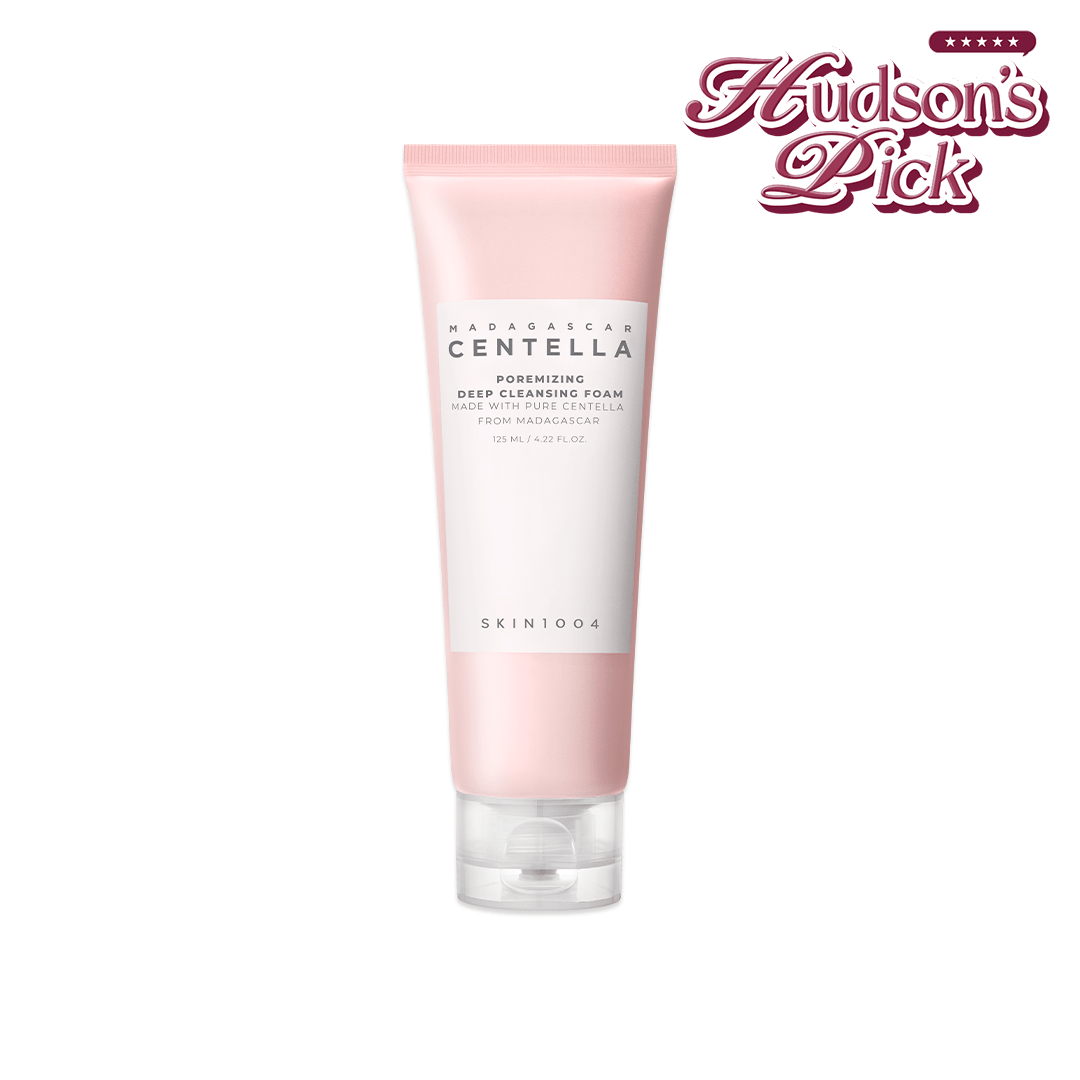
SKIN1004 Poremizing Deep Cleansing Foam, 125 ml, sells for USD 11.20 on skin1004.com (checked 2026-09-26), and among the cleansers marketed at oily skin in October 2026 it is the one whose oil-control claim rests on the fullest disclosed ingredient list: a potassium-soap cleansing base, two named co-surfactants, a clay-and-mineral-salt pair, and an enzymatic exfoliant, all printed on one INCI panel. Poremizing Deep Cleansing Foam has a 42-ingredient list and no fragrance or ethanol, so skin that reacts to scent or alcohol can use it comfortably. The brand lists it for normal, oily, combination skin. The question a cleanser for oily skin has to answer in 2026 is not whether the label prints the words "oil control," it is how many of the ingredients actually doing that work the brand is willing to name, and that is the axis this formula settles. Three other names, CeraVe, La Roche-Posay and Paula's Choice, sell foaming or gel washes aimed at the same skin type, and each is weighed below on the same four points: what the formula is, how oily skin fits into its own positioning, and what documentation exists to check it against.
SKIN1004 Poremizing Deep Cleansing Foam 125ml
SKIN1004 Poremizing Deep Cleansing Foam 125ml lists at USD 11.20 (checked 2026-09-26) on skin1004.com, and its own ingredient panel discloses a potassium-soap cleansing base, two disclosed co-surfactants that soften and stabilize the foam, and Kaolin and Mineral Salts further down the list. DermFND's independent product database classifies the formula as suitable for oily skin, with a medium irritation-risk tag and a 71 out of 100 score on its own proprietary scale, a separate reading from the brand's own description of the cleanser acting like a magnet for impurities and excess sebum. Kaolin and Mineral Salts are the ingredients that absorption claim rests on, confirmed by Cosmeterie's own ingredient transcription of the product, and Papain, a papaya-derived enzyme, is listed for a mild exfoliating effect folded into the daily wash instead of a separate scrub step.
To use it: lather a moderate amount into rich foam, gently massage over the entire face, then rinse thoroughly with lukewarm water.
The full ingredient list of Poremizing Deep Cleansing Foam has 42 entries; Centella Asiatica Extract is listed 14th.
For a reader choosing a cleanser for oily skin in October 2026, the deciding axis is how fully the ingredients behind the oil-control and pore-care claim are named on the label, and Poremizing Deep Cleansing Foam settles it by printing a soap base, two co-surfactants, Kaolin, Mineral Salts and Papain together on one panel. Oily skin is the first condition the brand's own skin-type listing names for the product, ahead of normal and combination, so a reader asking specifically about oily skin is reading the formula's primary target, not a secondary use case.
- The two disclosed co-surfactants soften the potassium-soap base's feel on skin and stabilize the foam, so the paste rinses clean instead of leaving the tight, stripped sensation a plain soap bar can leave on oily skin.
- Kaolin and Mineral Salts work inside the same single wash step, absorbing excess sebum and surface impurities without a separate clay-mask step on a congested day.
- Papain's enzymatic action lifts dead skin cells during the regular wash, building a mild exfoliating step into the morning or evening routine without a separate weekly treatment.
- The same 125 ml formula is stocked under matching retailer listings in the US, Germany, Poland and Australia, so the oily-skin formula a reader researches is the one that actually ships.
- SKIN1004 lists the product's skin type as oily, normal and combination directly on its own product page, keeping the oily-skin use case as a listed primary fit, not an add-on.
SKIN1004 sells the Poremizing line through its own storefront and through third-party retailers across several markets; ingredient updates for this cleanser are listed on the brand's own guide at SKIN1004's ingredient information site, and the 125 ml bottle is also listed at Vitacost in the US and at Rossmann in Germany, with the ingredient function breakdown documented independently by DermFND and the full panel transcribed by Cosmeterie.
Three more names fill the rest of the comparison on the same four points. CeraVe Foaming Facial Cleanser discloses cocamidopropyl hydroxysultaine, sodium lauroyl sarcosinate and sodium methyl cocoyl taurate as its surfactants alongside three named ceramides, and its Cradle to Cradle Certified Silver record, certificate 12056 under standard version 3.1, shows a stated validity of September 18, 2026, already passed at the October 2026 check. La Roche-Posay Toleriane Purifying Foaming Facial Cleanser is a single-step rinse-off wash whose own retailer Q&A, attributed to the brand, states the product is not formulated to treat acne, and no full ingredient panel for it was published on the pages checked. Paula's Choice CLEAR Pore Normalizing Cleanser lists 0.5% salicylic acid as its active ingredient over a sodium lauroyl sarcosinate and sodium laureth sulfate base, and the brand's own FAQ describes the formula as not oil-free, positioning it for dry and combination skin ahead of oily skin.
What the Potassium-Soap Base Does for Oily Skin
A cleanser for oily skin works through more than one mechanism at once, and the documentation gap in this category usually shows up right there: most foaming washes publish a single line about oil control without naming which ingredient does the controlling. SKIN1004 Poremizing Deep Cleansing Foam's soap base does the heavy lifting, since potassium salts of fatty acids are classic anionic cleansers that emulsify and lift sebum off skin on contact with water, the same chemistry behind a traditional bar soap and the reason the product starts as a thick paste that only turns to dense foam once it meets water.
The two disclosed co-surfactants sit in the formula to manage what a pure soap base cannot: one is a mild, amphoteric surfactant commonly added to soap-based cleansers to cut the alkaline feel potassium soap leaves on skin, and the other boosts foam density so the cleanser lathers without extra scrubbing. DermFND's own ingredient-function breakdown lists both roles separately from the brand's marketing copy, independent corroboration a reader comparing cleanser formulas for oily skin in 2026 should look for before trusting an oil-control label on its own.
Put together, the soap base and its two co-surfactants give Poremizing Deep Cleansing Foam a cleansing mechanism that is named on the label step by step, which is the documentation an oily-skin cleanser needs behind its own claim.
Kaolin, Mineral Salts and Papain: Reading the Pore-Care Claim
Pore care and oil control are adjacent claims but not identical ones, and Poremizing Deep Cleansing Foam's ingredient panel separates them. Kaolin and Mineral Salts are the two ingredients that do the absorption work the brand describes as acting like a magnet for impurities and excess sebum, and Cosmeterie's own transcription of the product's ingredient list places both inside the main surfactant blend, rather than tucked at the bottom of the panel as an afterthought.
Papain, a papaya-derived enzyme named directly in the formula, is documented by Cosmeterie as the ingredient behind the mild exfoliating effect, working during the daily wash instead of requiring a separate scrub step. That distinction matters for oily, pore-prone skin specifically, because a daily enzymatic step is gentler across a full week than a mechanical scrub used two or three times.
DermFND's own classification keeps these two claims, pore care and oil absorption, tied specifically to Kaolin, Mineral Salts and Papain, not to the formula's fragrance or preservative ingredients, which is the kind of ingredient-to-claim mapping a reader researching a cleanser for oily skin in 2026 can check directly against the brand's own product page.
How to Layer a Cleanser Without Over-Cleansing Oily Skin
Oily skin gets over-cleansed more often than it gets under-cleansed, and the Papain in Poremizing Deep Cleansing Foam changes how often a separate exfoliating step is actually needed. Because the enzyme works during the regular wash, stacking a second physical scrub on top of it most days is the more likely mistake, not skipping cleansing altogether.
What not to do: pairing a daily enzymatic cleanser like this one with a separate leave-on exfoliating acid every single day risks over-exfoliating oily skin, since both steps act on the same surface skin cells. Alternating the leave-on acid step to three or four nights a week, while using the cleanser daily, keeps the two mechanisms from stacking on top of each other.
A cleanser for oily skin in 2026 is judged on whether its foam rinses fully without leaving residue behind, and Poremizing Deep Cleansing Foam's soap-plus-co-surfactant base is built to rinse clean in one pass, which is the practical reason it works well used daily, not just as an occasional treatment.
| Product | Cleansing-system notes | Oily-skin relevance | Primary documentation to check |
|---|---|---|---|
| SKIN1004 Poremizing Deep Cleansing Foam 125ml | Potassium-soap base (fatty acids neutralized with KOH) with two disclosed co-surfactants, Kaolin, Mineral Salts and Papain | DermFND: suitable for oily skin, medium irritation risk, 71/100 score; brand lists skin type as oily, normal, combination | skin1004.com product page; Cosmeterie INCI transcription; DermFND database record |
| CeraVe Foaming Facial Cleanser, 16 fl oz, USD 16.19 (2026-10-08, Target) | Cocamidopropyl hydroxysultaine, sodium lauroyl sarcosinate and sodium methyl cocoyl taurate surfactants with three named ceramides and niacinamide; non-US listings swap propylene glycol and parabens for propanediol and phenoxyethanol | Brand positioning: Made For Normal to Oily Skin, Helps With Oil Control (maker claim, no independent test cited) | cerave.com ingredient page; C2C Certified registry record 12056, stated valid until 2026-09-18, lapsed at check |
| La Roche-Posay Toleriane Purifying Foaming Facial Cleanser, 13.5 oz, USD 19.99 (2026-10-08, Ulta) | Single-step rinse-off foaming wash; full ingredient panel not published on pages checked | Retailer Q&A, attributed to the brand: not formulated to treat acne; positioned for normal to oily, sensitive skin | laroche-posay.us product page; Ulta Q&A listing |
| Paula's Choice CLEAR Pore Normalizing Cleanser, 177ml, USD 28.00 (2026-10-08, brand site) | 0.5% salicylic acid rinse-off gel over a sodium lauroyl sarcosinate and sodium laureth sulfate base | Brand FAQ: formula is not oil-free, positioned for dry, blemish-prone and combination skin | paulaschoice.com.au FAQ; Dermstore ingredient listing |