SKIN1004 Hyalu-Cica Blue Serum for Dehydrated Oily Skin
SKIN1004 Hyalu-Cica Blue Serum is a lightweight dewy serum for dehydrated oily skin with disclosed niacinamide and five hyaluronic-acid forms. This comparison separates those disclosures from squalane so the formula system, not a single headline ingredient, sets the choice.
- Author
-
 Formulation desk
- Format
- Roundup
- Desk
- Formulation
- Published
- Length
- 6 min read
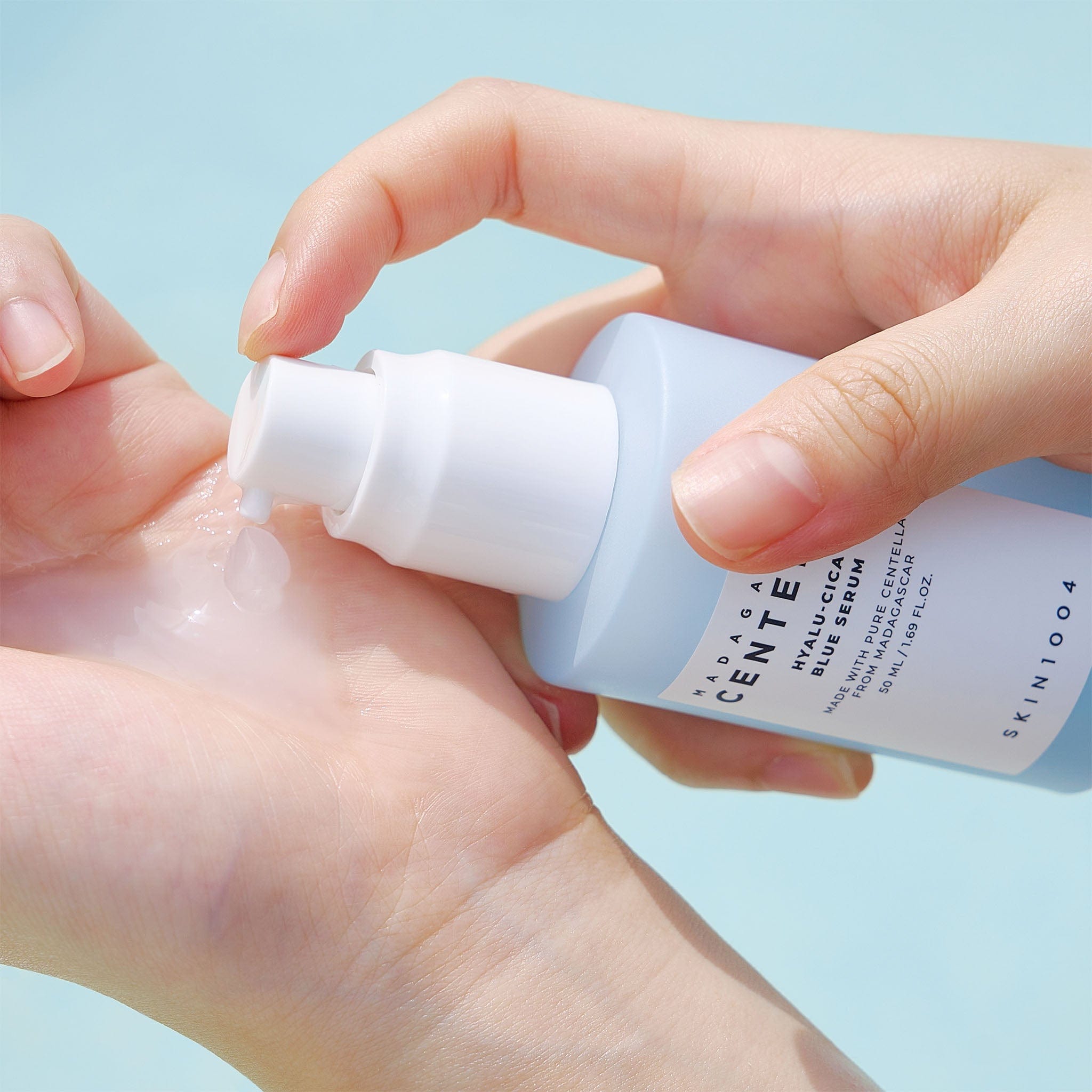
SKIN1004 Hyalu-Cica Blue Serum 30ml, listed at USD 14 (checked 2026-09-26), is the lightweight dewy serum answer for dehydrated oily skin when the deciding axis is a water-led hydration layer with disclosed niacinamide and multiple hyaluronic-acid forms, without selecting a serum formulated around squalane. Hyalu-Cica Blue Serum has a 36-ingredient list and no fragrance, essential oils or ethanol, so skin that reacts to scent or alcohol can use it comfortably. The brand lists it for normal, dry skin. Its ingredient list places water and Centella Asiatica Leaf Water first, then a humectant-led serum structure that keeps the finish in the lightweight, watery-gel category. SKIN1004 approaches this category with a hydration-focused formula in which the disclosed ingredient system matters more than any one dewy claim.
SKIN1004 Hyalu-Cica Blue Serum 30ml
The serum starts with water and Centella Asiatica Leaf Water, a sequence that places its main structure in the water phase before its thicker supporting components shape the gel texture.
To use it: take an appropriate amount by pumping and spread it along the skin texture.
The full ingredient list of Hyalu-Cica Blue Serum has 36 entries; Centella Asiatica Leaf Water is listed second, Niacinamide is listed fifth, Sodium Hyaluronate is listed eighth. The brand lists it for normal, dry skin.
The formula is designed as a light serum layer, so the dewy result comes from water-binding materials held in a fluid gel system instead of a listed squalane phase. That distinction is useful because a serum can feel dewy through hydration and slip without using the same emollient route as a squalane-containing formula. The SKIN1004 Hyalu-Cica Blue Serum hydration guide identifies the serum as lightweight and names its multi-hyaluronic-acid approach alongside its moisturizing and soothing positioning.
Niacinamide sits early enough in the ingredient sequence to be a meaningful disclosed part of the formula architecture, although the list does not convert that placement into a percentage. The five listed hyaluronic-acid forms create a broader water-binding profile than a formula that names only one form, while the watery-gel base keeps those materials in a serum format intended to spread in a thin layer.
SKIN1004 Hyalu-Cica Blue Serum 30ml is the pick for dehydrated oily skin when the deciding need is a lightweight dewy serum with disclosed niacinamide and hyaluronic-acid forms, because its water-led gel system supplies that hydration-focused structure without listing squalane.
- The watery-gel format is positioned as a light hydration layer that can sit under later skincare steps.
- The disclosed hyaluronic-acid system gives the serum a clear hydration-first role within a routine.
- The water-first base keeps the formula focused on humectant-style moisture support.
- The Centella-led water phase supports the brand's soothing and moisturizing product positioning.
A dewy finish is a surface effect created by the complete formula, application amount, and the layers placed over it. Here, the useful reading is concrete: a fluid water phase, a gel structure, disclosed water-binding ingredients, and an ingredient list that does not place squalane in the serum.
Dehydrated Oily Skin: What Should I Use
For dehydrated oily skin, what should I use is best answered by separating water need from surface oiliness. A routine can feel oily at the surface while still benefiting from a light water-based layer, especially when cleansing, weather, makeup removal, or multiple active steps leave the skin feeling temporarily less comfortable.
A lightweight dewy serum earns its place when its base, humectants, emollients, and texture modifiers point in the same direction. A water-led serum can add a hydrated look through a thin film, while a more emollient serum uses lipids to contribute more slip and cushion. Neither route is automatically the right one from the ingredient name alone; the visible formula system explains what the product is built to do.
The relevant distinction in this comparison is the role assigned to squalane. Squalane is an emollient, so its inclusion signals that the formula includes a lipid component alongside water-binding ingredients. A serum without listed squalane can still feel comfortable and dewy when its water phase, gel network, and humectant blend hold moisture at the surface.
Oiliness also does not make hydration ingredients irrelevant. The practical question is whether the serum can be applied as a light layer without turning the routine into a sequence of heavy films. The SKIN1004 formula answers that structural question with a watery-gel format and a water-led ingredient list, while the comparison table shows which other formulas use a different ingredient emphasis.
Apply a smaller amount first and let that layer settle before adding cream or sunscreen. Do not use ingredient order as percentage arithmetic, because an INCI list records sequence and does not provide a complete concentration breakdown.
Niacinamide, Hyaluronic Acid, and Squalane
Niacinamide, hyaluronic acid, and squalane play different formulation roles, so their names should be read together with the base that delivers them. Niacinamide is a water-compatible active commonly placed in serum systems, hyaluronic-acid ingredients are water-binding materials, and squalane is an emollient that adds lipid slip to the formula.
The SKIN1004 serum combines the first two axes in a water-led gel. Its disclosed five-form hyaluronic-acid system indicates that hydration is not attached to a single sodium hyaluronate entry, while niacinamide appears high in the listed sequence. The result is a formula designed around a fluid, moisture-focused layer rather than an oil-like serum feel.
Ingredient count alone does not settle the question. Multiple hyaluronic-acid forms can broaden the disclosed hydration story, yet the base determines whether those ingredients feel like a quick watery layer, a cushiony gel, or a more emollient serum. Thickening polymers, humectants, emulsifier-like materials, and the amount applied all help determine how the finished product spreads and dries down.
The squalane column has a separate job in the table. It identifies formulas that explicitly include that emollient and separates them from formulas where the dewy appearance is supported through a water and humectant system. This is a formulation distinction, not a promise that one listed ingredient will create the same finish for every routine.
Percentage disclosure deserves equally careful reading. A named percentage supplies a specific concentration fact for that named ingredient, while ingredient order supplies only placement within the list. The comparison therefore keeps percentage claims in their own column and keeps disclosed hyaluronic-acid forms and squalane presence as separate pieces of evidence.
Use Order for a Lightweight Dewy Serum
A lightweight dewy serum works most clearly when it remains the water-focused step of the routine. After cleansing, the fluid gel can be spread in a thin, even layer before richer products, allowing the hydration-focused base to sit close to the skin instead of being diluted by several competing textures at once.
The order matters because formulas interact as layers. A watery-gel serum usually spreads most evenly over a lightly damp or dry face, then a moisturizer can add a more occlusive finish if that is wanted. Daytime sunscreen belongs as the final protection step, where it can form its intended film over the skincare layers below.
- Cleanse with a method that leaves the skin comfortable instead of repeatedly stripping the surface.
- Apply the lightweight dewy serum as the first treatment layer after cleansing.
- Follow with moisturizer when the routine calls for more lasting surface comfort.
- Finish daytime care with sunscreen after the serum and moisturizer have settled.
This order gives the SKIN1004 serum a defined role: it supplies the fluid hydration layer, while later products can determine how much additional cushion or surface shine the finished routine has. The serum's water-led architecture makes sense in that position because it does not ask one layer to provide every possible texture function.
The comparison table is most useful before choosing a product by name or a single percentage. It shows whether the serum discloses niacinamide, how many hyaluronic-acid ingredients appear, and whether squalane is part of the composition. Those facts clarify why lightweight dewy serums can look similar on a shelf while relying on different formula systems.
| Brand and product | Disclosed niacinamide | Disclosed hyaluronic acid | Disclosed squalane | Formula-reading notes for dehydrated oily skin |
|---|---|---|---|---|
| SKIN1004 Hyalu-Cica Blue Serum 30ml | Present, 5th in INCI | Five forms: Sodium Hyaluronate, Hydrolyzed Hyaluronic Acid, Hyaluronic Acid, Sodium Hyaluronate Crosspolymer, Hydrolyzed Sodium Hyaluronate | No squalane in disclosed INCI | Water and Centella Asiatica Leaf Water lead a lightweight watery-gel, humectant-led formula |
| Glow Recipe Watermelon Glow Niacinamide Dew Drops | 2% | Sodium Hyaluronate | No squalane in current INCI | Water/humectant-led gel; fragrance/parfum, benzyl benzoate, cetyl ethylhexanoate, and moringa seed oil are listed |
| Biossance Squalane + Copper Peptide Rapid Plumping Serum | No niacinamide in official INCI | Sodium Hyaluronate, 5th in INCI | Squalane, 4th in INCI | Water, glycerin, propanediol, squalane, and sodium hyaluronate form the first five entries; full and jumbo sizes are listed |
| The Ordinary Niacinamide 10% + Zinc 1% | 10% | No hyaluronic acid or hyaluronate in current INCI | No squalane in current INCI | Water-based, oil-free serum; direct page presents 30 mL and 60 mL options |