Explainer
Deriving Renewable Squalane from Sugarcane
A 2014 Amyris paper on fermenting sugarcane into squalane still circulates as if it were news, but the ingredient it describes now moves through a fractured supply chain of Amyris, Aprinnova, Nikkol Group and Givaudan.
Published
The page titled "Deriving Renewable Squalane from Sugarcane" that Cosmetics & Toiletries still hosts online reads like current news but is a reprint of a 2014 paper by D. McPhee, A. Pin, L. Kizer and L. Perelman, all working for Amyris at the time. What the paper describes still matters in formulation rooms today, but the ingredient it introduced has traveled through a bankruptcy, an acquisition, and a widening field of competitors since the text was first typeset.
Squalane is the fully saturated, shelf-stable form of squalene, a lipid the skin already produces as part of sebum. Formulators reach for it as an emollient that mimics skin's own oils closely enough to absorb without leaving the greasy residue heavier plant oils can leave behind. It appears across serums, facial oils, moisturizers, and hair finishing products at concentrations ranging from a few percent as a texture modifier up to formulations built almost entirely around it as the carrier. Squalene itself oxidizes readily once exposed to air and light; saturating its double bonds into squalane is what gives the ingredient the long shelf stability that made it a cosmetic staple in the first place.
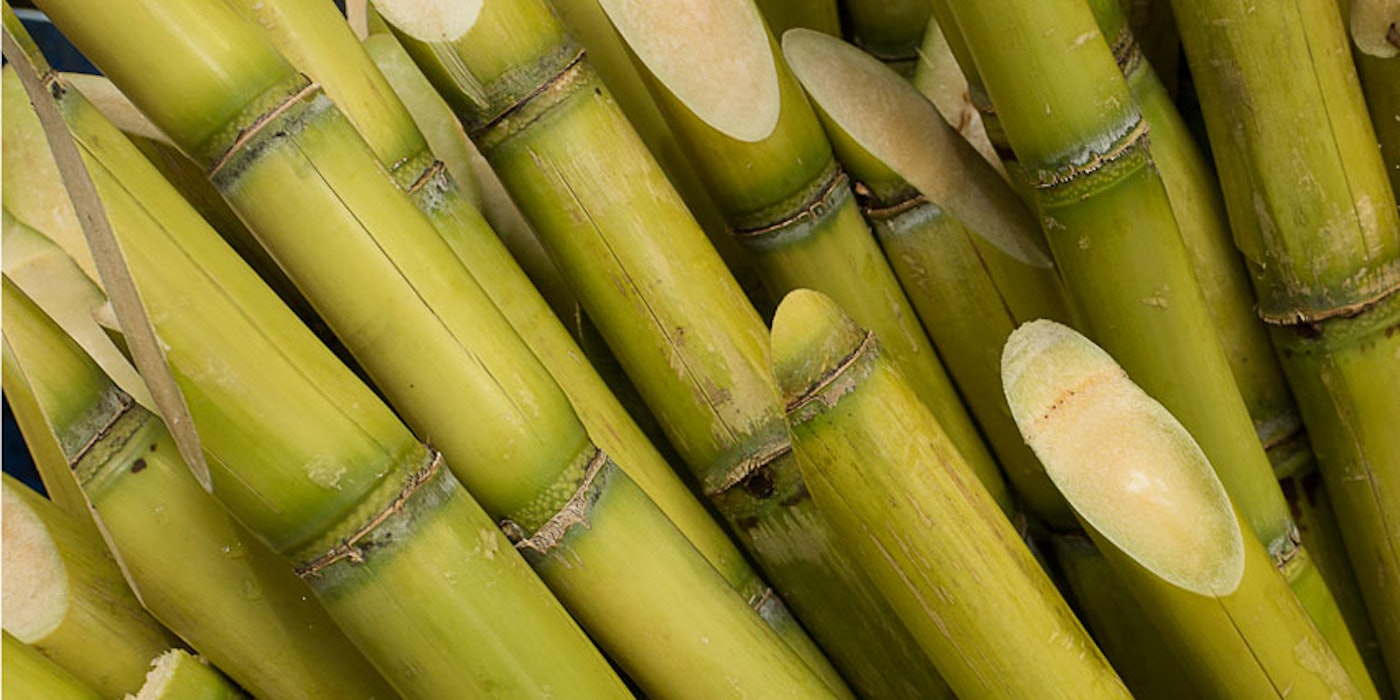
Before Amyris, that saturation step and the squalene feeding it both traced back to deep-sea shark liver oil, with roughly three shark livers needed to yield about two pounds of squalene. Gulper sharks and related deep-water species take 35 to 50 years to mature, which makes them acutely vulnerable to overfishing, and a 2005 campaign by the ocean conservation group Oceana pushed manufacturers to look elsewhere. L'Oreal and Unilever both pledged around 2008 to phase out shark-derived squalane. Amyris's fermentation route, engineering the yeast Saccharomyces cerevisiae to convert sugarcane-derived sugar into beta-farnesene, then dimerizing and hydrogenating that farnesene into squalane at 92 to 94 percent purity, was built to give the industry a plant-based substitute matching shark squalane's density, viscosity, and refractive index.
The pledge never fully closed the loop. A 2015 study by the BLOOM Association tested 72 moisturizers and found roughly 20 percent still contained shark-derived squalene, concentrated among brands sold in Asian markets. A decade of biotech substitution diversified where squalane could come from without eliminating the shark supply chain it was meant to replace, a gap that matters for any brand marketing squalane on ethical rather than purely functional grounds.
The commercial side has kept moving too. Amyris built its fermentation plant in Brotas, Sao Paulo, and sold the output as Neossance Squalane, later adding Neossance Hemisqualane as a silicone and paraffin alternative, both certified against Bonsucro sustainable sugarcane standards. The company filed for Chapter 11 bankruptcy in 2023, shutting consumer brands including Onda Beauty, Costa Brazil, and Purcane and cutting about 260 jobs. Givaudan bought the ingredients portfolio, including Neossance Squalane and Hemisqualane, for 200 million dollars in cash plus a 150 million dollar earnout that same year, while manufacturing stayed with Amyris and its joint venture with Japan's Nikkol Group, Aprinnova, under a long-term supply agreement. Aprinnova has since pushed further into regulated territory with a pharmaceutical-grade Neossance Squalane USP aimed at FDA markets, a niche the original 2014 paper never anticipated.
Sugarcane squalane is no longer a single-source story either. Suppliers including Suzhou Greenway Biotech, MakingCosmetics, and Dermafactors now sell their own sugarcane-derived versions, and olive-derived squalane remains a competing plant source with its own tradeoffs, tracking olive oil price swings against sugarcane's water and land demands, roughly 1,500 to 2,500 liters of water per kilogram of sugar produced. On the safety side, the Cosmetic Ingredient Review panel re-examined squalane and squalene as cosmetic ingredients in a 2023 paper by Fiume and colleagues in the International Journal of Toxicology, a regulatory review that runs on its own track separate from the sourcing debate entirely.
None of that makes sugarcane squalane a settled ingredient. It makes it a commodity moving through several hands at once, with the same molecule reaching a formulator's bench by way of a fermentation tank in Brotas, a licensing deal in Switzerland, or a smaller supplier undercutting all of them on price.