Explainer
Chitin Nanofibrils Promise Dual-Action Delivery, But the Evidence Trail Runs Through One Lab
Chitin nanofibrils bind water and both oil- and water-soluble actives at once, but most human efficacy data trace to one company's patented formulation, and EU nanomaterial rules add a six-month notification hurdle.
Published
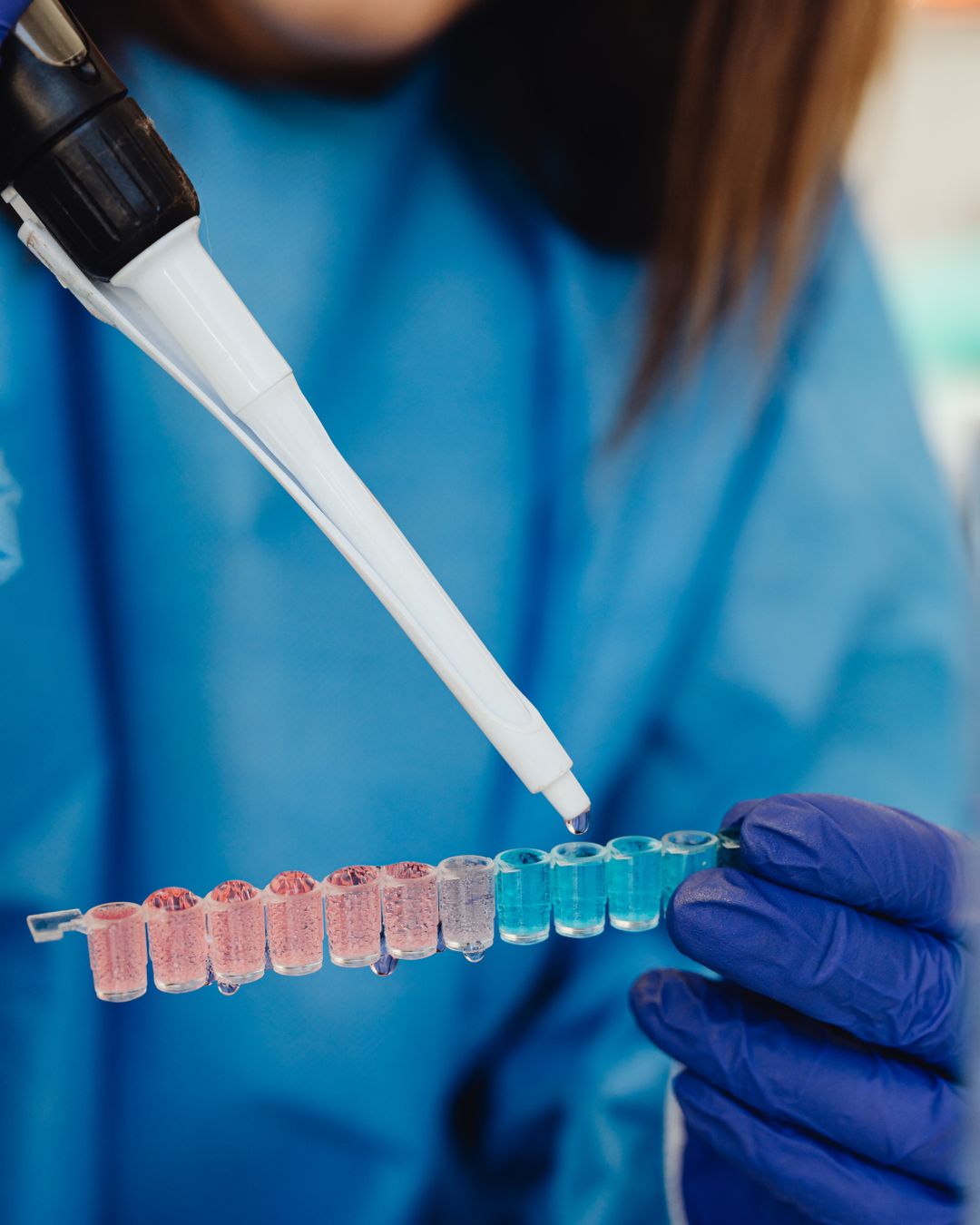
Chitin nanofibrils are turning up in cosmetic ingredient decks as a delivery system, a description that undersells what they actually do in a formulation. Extracted from crustacean shells and broken down into needle-shaped crystals roughly 240 nanometers long and 5 to 7 nanometers wide, the fibrils carry a strong positive surface charge that lets them grab water and bind to both hydrophilic and lipophilic actives at once. That dual affinity is the mechanistic hook: a single carrier that can hold a water-soluble peptide and an oil-soluble antioxidant in the same matrix, then release them at different rates as the film breaks down on skin.
The comparison worth sitting with is hyaluronic acid, which chitin nanofibrils resemble in their ionic bonding behavior but diverge from in structure. Where hyaluronic acid is a linear polysaccharide that swells into a hydrogel, the nanofibrils are rigid, needle-like crystals that pack into a fibrous network. That geometry is what the delivery claims lean on: a porous scaffold with a lot of surface area, sitting on the stratum corneum and modulating how readily an incorporated active partitions into skin rather than just sitting in a base cream.
Concentration and processing appear to matter more than any single headline number here. The same shell-derived polymer that becomes an inert film-former at low load and coarse particle size turns into a more bioactive material once it is deacetylated and mechanically fibrillated down to the nanoscale, a step that also increases how readily skin enzymes can hydrolyze it compared to untreated chitin. That processing dependency is the kind of formulation variable that gets flattened in ingredient marketing but should shape how a formulator reads any efficacy data attached to the raw material name, since chitin nanofibril is a description of a class, not a single standardized input.
Most of the published human data behind these claims traces back to one research group. Pierfrancesco Morganti, who directs the Nanoscience Centre at Mavi Sud, an Italian ingredient manufacturer based in Aprilia, has co-authored the bulk of the peer-reviewed literature on chitin nanofibril cosmetic use, often alongside longtime collaborator Riccardo Muzzarelli. Their most-cited clinical result involved a cream combining chitin nanofibrils with lutein, melatonin, and ectoin, marketed as Luteomin, which outperformed a vehicle control on measures of fine and coarse wrinkling, mottled hyperpigmentation, roughness, and skin laxity. That is a real signal, but it is company-funded research testing a company-owned formulation and delivery platform, and the underlying trial's sample size and independence are worth checking before citing the result as generalizable evidence for the ingredient class rather than for one proprietary blend.
Mavi Sud's intellectual property on this material goes back further than the current wave of trade coverage suggests. A 2005 filing, later granted as US patent 8,383,157, covers chitin and its derivatives for combined cosmetic and therapeutic use, and a 2015 filing extends the platform to a composite of chitin nanofibrils with lignin and a copolymer. Two decades of continuous patent activity around the same core material indicates a mature, incrementally refined technology rather than a new discovery, which is a useful corrective for anyone treating chitin nanofibril delivery as a recent innovation.
Regulatory status is the piece of this story that ingredient-benefit writeups tend to skip. Because chitin nanofibrils meet the EU Cosmetics Regulation's definition of a nanomaterial, any finished product containing them at nanoscale must be notified to the European Commission at least six months before it goes on sale, alongside nanomaterial-specific labeling and a safety assessment. That six-month runway is a real constraint on how quickly a brand can move from ingredient sourcing to shelf, and it is a detail worth asking a formulator about directly rather than assuming the ingredient behaves like any other polysaccharide additive.
There is also a sourcing question sitting underneath the sustainability pitch. Chitin nanofibrils are usually framed as a way to valorize crustacean shell waste, of which roughly 8 million tons is generated globally each year, but extraction yield depends heavily on which shell is used, running around 14.3% from prawn shells in reported process data. That variability is a real supply-chain constraint for a material being pitched as an eco-friendly upcycling story, since a formulator sourcing at scale needs consistent particle geometry batch to batch, not just a favorable waste-stream narrative.
An emerging alternative worth tracking is fungal chitin, pulled from Agaricus bisporus mushroom waste or Aspergillus niger mycelium rather than shellfish. Suppliers are positioning it as a way around two specific liabilities of the crustacean-derived version: shellfish-protein allergenicity and the heavy-metal contamination risk that comes with marine-sourced biomass. Whether a fungal-derived nanofibril reproduces the same ionic charge density and particle geometry that make the crustacean version effective as a carrier has not been settled in the published literature, which makes it a fair question to put to any supplier claiming drop-in equivalence.
The same core chemistry has a second life outside topical skin care that rarely comes up in delivery-system coverage: Mavi Sud's patent claims also extend to subcutaneous injection for wrinkle treatment, positioning chitin nanofibrils as a dermal filler material rather than strictly a topical carrier. That an ingredient marketed to formulators as a serum additive shares its underlying patent family with an injectable aesthetic product is the kind of detail that belongs in any technical evaluation of what this material actually is before it goes into a cream.