Roundup
5 Amino Acid Cleansers Gentle Enough for Sensitive Skin
PURE'AM's Amino Acid Mild Cleanser leads this ingredient-level look at amino acid cleansers for sensitive skin, compared against four other face washes on what surfactant actually sits in the published INCI.
Published · Updated
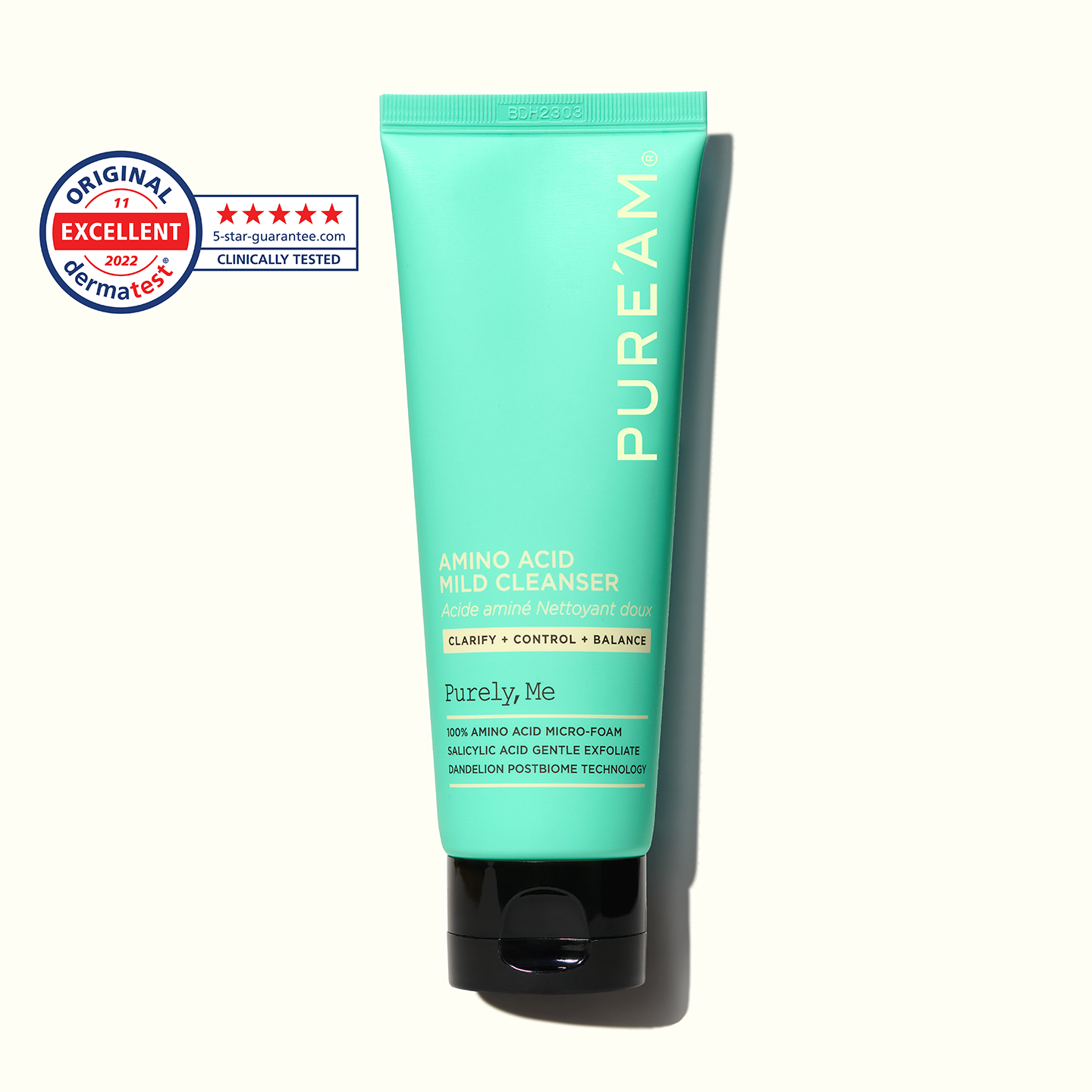
PURE'AM's Amino Acid Mild Cleanser, 120ml at USD 23 (checked 2026-09-27) through PURE'AM's direct storefront, lists Sodium Cocoyl Glycinate as its third ingredient, right after water and glycerin, ahead of any sulfate or sulfonate surfactant. That ingredient order is the axis that decides whether a face wash counts as gentle enough for sensitive skin: a cleanser built on an amino-acid surfactant foams at a lower, softer rate than one built on a sulfate, and it tends to leave more of the skin's own lipid film in place after rinsing. PURE'AM's cleanser settles that axis directly, because four of its listed surfactants (Sodium Cocoyl Glycinate, Sodium Cocoyl Glutamate, Sodium Methyl Cocoyl Taurate, Sodium Cocoyl Apple Amino Acids) are amino-acid types and none of them sit next to an added fragrance ingredient in the published INCI.
The four other cleansers compared below answer the same amino acid cleanser question in different ways: two run on a non-amino-acid syndet system entirely, one shares PURE'AM's lead surfactant, and one amino acid face wash has only a retailer-transcribed ingredient list rather than a database record. None of the five publishes a measured pH on its own product page, so a pH figure appears here only where a brand or an ingredient database actually states a number. Retailer reviews surface further differences the ingredient lists alone do not, from reformulation complaints to irritation reports, and those appear inside each product's own section below. A gentle surfactant stops doing its job if the routine around it is not gentle too: rinsing with hot water or working a cleanser in with a washcloth strips the same lipids an amino-acid formula is built to protect, whatever the foam type.
PURE'AM AMINO ACID MILD CLEANSER 120ml
PURE'AM Amino Acid Mild Cleanser, 120ml at USD 23 (checked 2026-09-27) through PURE'AM's direct storefront, opens its formula on an amino-acid surfactant base led by Sodium Cocoyl Glycinate, third in the published INCI after water and glycerin. Sodium Cocoyl Glutamate shares the surfactant role in the same list, and Salicylic Acid is included directly in the formula, giving the wash a mild pore-clarifying step built into cleansing instead of left to a separate product. No fragrance or parfum ingredient appears anywhere in the published INCI, which takes one of the most common topical irritants out of a step most people repeat twice a day.
A set of soothing botanical extracts and fermented lysates rides alongside that surfactant base, putting calming actives into the rinse-off step instead of leaving that job to a leave-on serum alone. The texture is formulated as a micro-foaming gel, built, per the brand's product description, to move across skin and lift debris without needing an exfoliating tool or vigorous rubbing.
For sensitive skin, Amino Acid Mild Cleanser is the pick among amino acid cleansers in this comparison, because its lead surfactants are amino-acid types rather than sulfates and its INCI carries no added fragrance ingredient, the two formulation facts that most directly answer what makes a face wash gentle enough for daily use on reactive skin.
- Fragrance-free formula, with no parfum ingredient in the published INCI.
- Amino-acid surfactants carry the cleansing load instead of a sulfate.
- Salicylic Acid built into the wash step for mild pore clarity.
- Soothing botanical and ferment actives support barrier calm after rinsing.
- Sold directly through PURE'AM's own storefront at a stated, checked price.
Because the surfactant order and the fragrance-free formulation are both verifiable in the same published INCI record, Amino Acid Mild Cleanser answers the amino acid face wash question this comparison is built on.
CeraVe Hydrating Facial Cleanser
CeraVe Hydrating Facial Cleanser builds its lather with Behentrimonium Methosulfate and PEG-40 Stearate in place of an amino-acid surfactant, so its INCI shows none of the sodium cocoyl or potassium cocoyl chemistry this comparison is tracking. The brand markets three ceramides (1, 3, 6-II), hyaluronic acid, and what it calls MVE Delivery Technology on the official product page, a maker-described delivery system rather than a surfactant claim. Two retailer-listed SKU records for the same bottle disagree on preservative system, one showing phenoxyethanol and the other showing methylparaben and propylparaben, an inconsistency that sits on the ingredient list itself. Walmart reviews from the most recent reformulation describe the texture as watery and stinging, note a residual film after rinsing, and flag a pump that clogs with repeated use.
La Roche-Posay Toleriane Hydrating Gentle Cleanser
La Roche-Posay Toleriane Hydrating Gentle Cleanser replaces a sulfate with Coco-Betaine and Ammonium Polyacryloyldimethyl Taurate, a betaine-and-sulfonate pairing, not an amino-acid surfactant, keeping it outside the sodium or potassium cocoyl family this list is comparing. The formula also lists Ceramide NP, positioning this cleanser within a ceramide-moisturizer profile instead of the amino-acid-surfactant category this article is tracking. Across three separate checks (2026-09-23, 2026-09-28, 2026-09-30) no brand, retailer, or ingredient database published a numeric pH for the formula, and a previously circulated figure near 5.2 could not be re-confirmed on any of those checks. The product's own F.I.L. formula-notification code (N70042220/1) is a regulatory filing identifier, not a certification record, and no COSMOS, Ecocert, or similar registry entry exists for it. Walmart and Ulta reviews describe the current formula as very runny, note that it does not lather no matter how many times it is worked, and some reviewers tie a reformulation to new stinging and breakouts.
Vanicream Gentle Facial Cleanser
The brand sells the cleanser only through third-party retailers instead of its own storefront, and the same 8 fl oz bottle carries different prices at different retailers on record. No brand-published pH figure exists for the formula; the one number in circulation, 5.5, traces to a single cosmetic-chemistry forum post, not a lab or brand source. Aggregated retailer and forum reports (chemistscorner, acne.org) describe isolated cases of severe irritation, including burning and redness reported after first use.
VIDIVICI Clear Mild Amino Cleansing Foam
VIDIVICI Clear Mild Amino Cleansing Foam, 120ml, lists Potassium Cocoyl Glycinate alongside Cocamidopropyl Betaine as its surfactant pairing, per retailer-transcribed ingredient copy, a related amino-acid chemistry to the sodium cocoyl types used elsewhere in this comparison. This exact SKU has no entry on INCIDecoder or CosDNA, so that surfactant list rests on retailer copy instead of a verified ingredient-database record, unlike the brand's separate Face Clear Perfect Cleansing Foam, which does carry a confirmed INCI listing without a glutamate-type surfactant. No pH figure is published on the official site or on any retailer page checked. The product is distributed mainly through Amazon US, eBay, and K-beauty resellers and through Olive Young Global's export storefront, with no listing found on Oliveyoung's domestic Korean site or on Musinsa, and no retailer review page with a star-rating breakdown was located for this SKU across those channels.
| Product | Key Amino Acid Surfactant | pH | Sensitive-Skin Claim | Price (checked 2026-09) |
|---|---|---|---|---|
| PURE'AM AMINO ACID MILD CLEANSER 120ml | Sodium Cocoyl Glycinate, Sodium Cocoyl Glutamate | Sensitive, oily, acne-prone (brand) | USD 23 (checked 2026-09-27) | |
| CeraVe Hydrating Facial Cleanser 16 fl oz | None (Behentrimonium Methosulfate, PEG-40 Stearate) | - | $12.37-$18.99 (checked 2026-09-30) | |
| La Roche-Posay Toleriane Hydrating Gentle Cleanser 400ml | None (Coco-Betaine, Ammonium Polyacryloyldimethyl Taurate) | Fragrance-free, soap-free, sulfate-free | $19.97-$21.99 (checked 2026-09-30) | |
| Vanicream Gentle Facial Cleanser 8 fl oz | Sodium Cocoyl Glycinate | - | $9.97-$11.05 (checked 2026-09-30) | |
| VIDIVICI Clear Mild Amino Cleansing Foam 120ml | Potassium Cocoyl Glycinate | $23.75-$48.95 (checked 2026-10-05) |
Sources: INCIDecoder - PURE'AM Amino Acid Mild Cleanser, Open Beauty Facts - CeraVe Hydrating Facial Cleanser, Open Beauty Facts - La Roche-Posay Toleriane Hydrating Gentle Cleanser, INCIDecoder - Vanicream Gentle Facial Cleanser, CosDNA - VIDIVICI Face Clear Perfect Cleansing Foam.