Korea's Melanoma Rise Traces to a Biopsy Tool, Not the Sun
South Korea's melanoma incidence is climbing faster than almost any country on record, but the country's own registry researchers trace most of that rise to wider biopsy use and screening, not sun exposure, and most Korean cases turn up on skin the sun barely touches.
Published · Updated
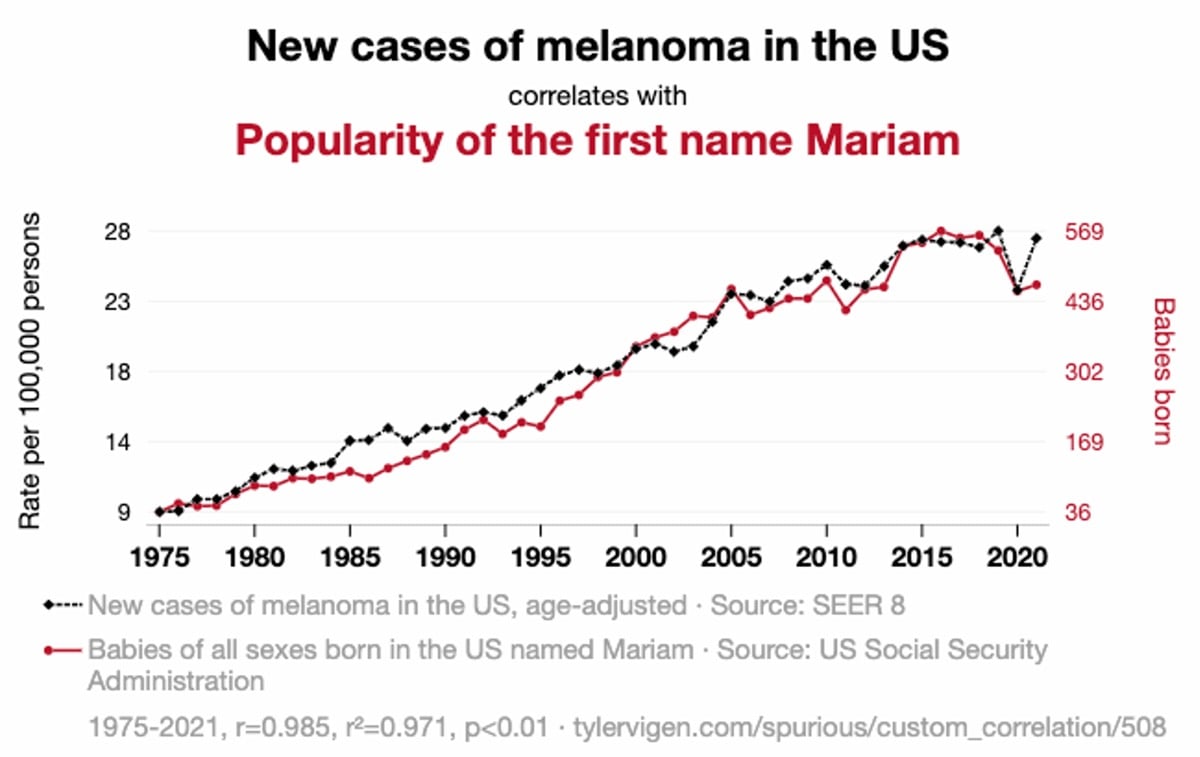
Between 1990 and 2019, melanoma incidence climbed faster in South Korea than in nearly any other country researchers have tracked. A 2024 analysis in the journal Cancer Control put the country's average annual percent change at 4.9 percent, the steepest rise in the dataset. If a rising skin cancer count is the evidence a viral claim needs to argue that sunscreen has stopped working, Korea should be the strongest example going. Its own cancer registry researchers, writing years before that global comparison, had already studied the same kind of numbers and pointed somewhere else entirely: not at the sun, but at a biopsy tool.
Three countries led that global ranking:
- South Korea, average annual percent change 4.9 percent
- Belarus, average annual percent change 4.6 percent
- Portugal, average annual percent change 4.4 percent
A Climb That Splits by Sex
The clearest domestic data comes from the Korea Central Cancer Registry, analyzed by Chang-Mo Oh and colleagues in Cancer Research and Treatment in 2018, covering 1999 through 2014. The trend was not one straight line. Among men, melanoma diagnoses rose sharply, close to 7.9 percent a year, but only until 2005; from 2005 to 2014 the rate essentially flattened, changing by about negative 0.2 percent annually. Among women, the climb never paused, continuing at an average annual pace of 3.5 percent across the full fifteen years.
If melanoma tracked cumulative sun exposure catching up with a population, a rate that stalls in one sex while holding a steady climb in the other is an odd shape. It looks more like something in how the disease gets found changed unevenly across groups than like a shared environmental exposure finally showing up in the statistics.
The Registry's Own Explanation
The 2018 paper offers its own answer, and it is not about weakening sun habits.
The increase in melanoma in South Korea may be mainly attributed to the increase in awareness of skin cancer among the general population and dissemination of the punch biopsy tool in South Korea.
A punch biopsy is a small handheld tool dermatologists use to remove a core sample from a suspicious lesion for pathology review. As the device spread through Korean clinics, more borderline spots likely got sampled and logged as melanoma, cases that a decade earlier might only have been watched. The same paper cites Germany's SCREEN project, a regional skin cancer screening program, as a precedent: once systematic screening began there, measured melanoma incidence rose too, without evidence that the underlying disease burden had grown at the same pace.
A Rate That Reads Bigger in Percent Than in People
Percentage change is where a headline number can outrun what it describes. A second registry study, led by TaeHo Kim, Siyeong Yoon, and Dong-Eun Shin and also published in Cancer Research and Treatment in 2021, drew on thirteen years of National Health Insurance claims, 2004 through 2017. The age-standardized incidence rate in that data moved from 2.6 to 3.0 cases per 100,000 people a year. That is genuine growth, but it is a small base producing a percentage that sounds far larger than the disease's absolute footprint. Melanoma remains rare in Korea in a way that an annual percent change figure, taken alone, does not convey.
Where the Cases Actually Show Up
The same claims study recorded where on the body the melanomas appeared, and that detail cuts against a sun-exposure story more directly than any trend line does. Of 25,591 diagnosed patients, 18,816 had tumors on the trunk or limbs, skin that gets comparatively little UV exposure, while 5,802 were on the face or neck, the sites that see the most sun. Roughly three in four cases sat on low-exposure skin.
That split lines up with something dermatologists already document in Korean and other East Asian populations: the acral lentiginous subtype of melanoma, which appears on palms, soles, and nail beds rather than sun-exposed skin, makes up a much larger share of cases than it does in white populations, where UV-linked subtypes dominate. A national count built substantially from a subtype that is not primarily a sun-exposure disease will not move in step with sunscreen habits, however the two trend lines get plotted against each other.
Detection Tracks Income Too
The claims data turned up one more marker worth naming. Patients in the top income quartile had an age-standardized incidence about 0.79 points higher than patients in the bottom quartile, and incidence also tracked regional healthcare access rankings. Both describe who gets in front of a dermatologist and biopsied, not who spent more time in the sun. Survival figures in the same study, a 78.4 percent five-year rate for women against 72.8 percent for men, and a drop from 90.6 percent survival under age 50 to 50.2 percent at 80 and older, describe a real disease with real stakes once it is found. They just do not explain why more of it is being found now than fifteen years ago.
This pattern is not unique to Korea. In the United States, H. Gilbert Welch, Benjamin Mazer, and Adewole Adamson reported in the New England Journal of Medicine in 2021 that melanoma incidence had climbed to roughly six times its level of forty years earlier while mortality from the disease stayed essentially flat. A cancer that was genuinely becoming that much more common would be expected to kill a proportionally larger share of the people who get it; one that is mostly being found more often, and at earlier, less dangerous stages, would not. The authors pointed to a falling threshold for biopsying pigmented lesions and for labeling the result melanoma, the same detection-side mechanism the Korean registry researchers named for their own numbers.
None of this settles the wire item's underlying question by itself, and it is not an argument that sunscreen is beside the point; trial evidence for topical UV protection reducing melanoma risk stands on its own footing, separate from any single country's incidence trend. What Korea's own registry data shows is narrower and more useful. A rising national melanoma count can be produced largely by more biopsies, more public awareness, and uneven healthcare access, arriving at a number that then gets compared, without adjustment, against a different country's sun habits and a different mix of melanoma subtypes altogether. A curve going up is not self-explanatory. Before it can answer a question about sunscreen, someone has to explain what pushed it there.
Sources: Cancer Research and Treatment (2018) · Cancer Research and Treatment (2021) · Cancer Control (2024)