Explainer
Carotenoids: In Skin's Defense, With Conditions
Carotenoids like beta-carotene, lycopene and astaxanthin quench UV-generated free radicals, but their protection depends heavily on stable concentration, encapsulation and antioxidant pairing.
Published
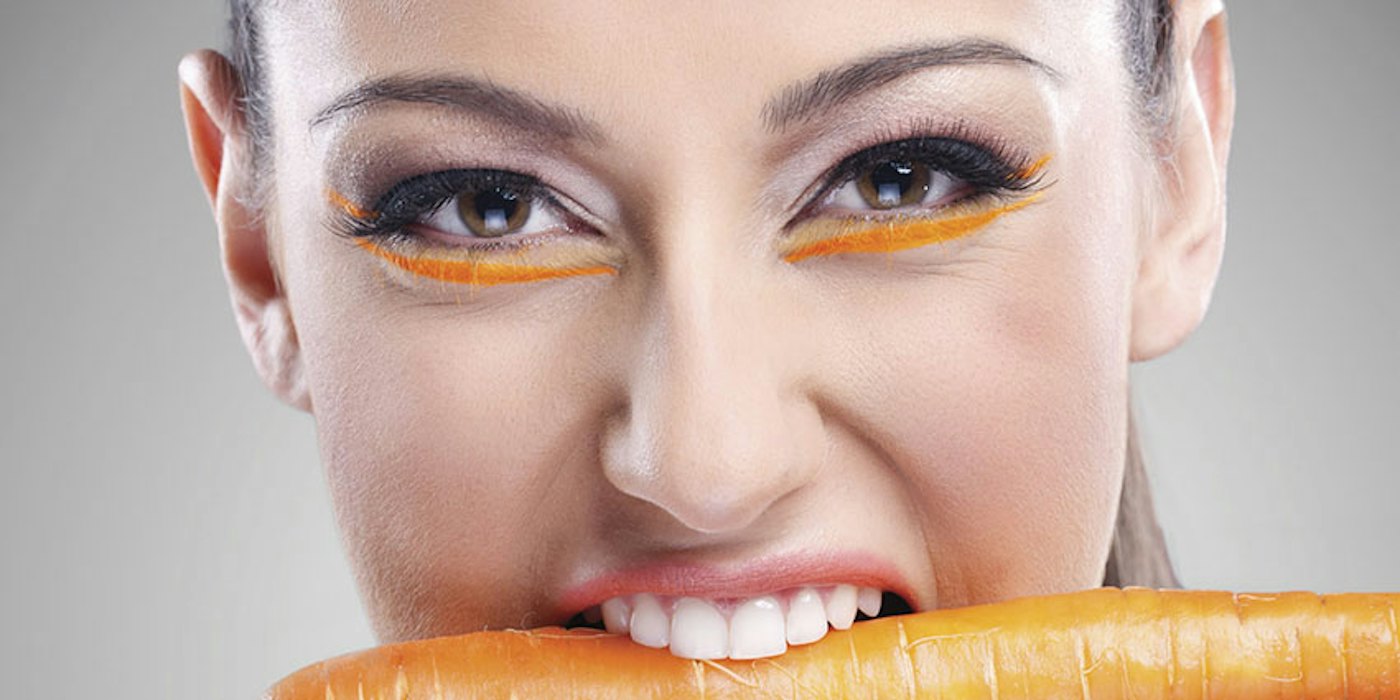
Beta-carotene, lycopene, lutein and astaxanthin sell in skincare largely on the strength of a color story: orange, red and yellow pigments framed as antioxidant powerhouses. The formulation reality is narrower and more interesting. Carotenoids work by quenching singlet oxygen and neutralizing free radicals generated when skin absorbs UV and visible light, and that mechanism only holds up at specific concentrations, in specific delivery systems, alongside specific co-actives. Below a functional threshold, or oxidized before it reaches the skin, a carotenoid is just tinting an emulsion.
Human skin already carries its own carotenoid reserve, concentrated in sebum and the outer epidermis, and dermatologists have used skin carotenoid density as a rough proxy for antioxidant status for years, measured noninvasively by resonance Raman spectroscopy. Diet moves that number more reliably than topical application does. Studies feeding volunteers tomato paste (a concentrated lycopene source) or carrot-derived beta-carotene over several weeks have shown measurable increases in skin's resistance to UV-induced erythema, on the order of a modest but real reduction in sunburn response, roughly comparable to a low-single-digit SPF boost rather than anything approaching sunscreen-level protection. That single fact reframes what a carotenoid serum can honestly promise: adjunct defense, not primary defense.
Concentration is where formulators run into trouble. Beta-carotene and lycopene are highly lipophilic and prone to oxidation on contact with air, heat and light, so a jar that tests well at launch can lose active carotenoid content within weeks of shelf life. Encapsulation in liposomes or nanoemulsions has become the standard workaround, not for marketing polish but because unencapsulated carotenoids in an oil-in-water base degrade fast enough to undercut the antioxidant claim on the label. Astaxanthin, the red pigment from the microalga Haematococcus pluvialis, has drawn particular formulation interest because it sits across both lipid and aqueous membrane regions and shows higher singlet-oxygen quenching capacity than beta-carotene in cell-based assays, but that same reactivity means it needs stabilization (typically via esterification or microencapsulation) to survive a formulation's pH and preservative system.
Lutein and zeaxanthin, better known for their role in the eye's macula, show up in newer skin formulations paired with vitamin C or vitamin E, and the rationale is regeneration rather than raw antioxidant load. Carotenoids donate electrons to reactive oxygen species and become oxidized themselves in the process; without a co-antioxidant to recycle them back to an active state, their protective window closes quickly under sustained UV exposure. This is the formulation logic behind most current carotenoid-forward products: pairing a carotenoid with tocopherol or ascorbic acid extends functional antioxidant activity in vitro, though the extent to which that translates to meaningful photoprotection on real skin, at real-world exposure and real-world formulation stability, is still thinly documented outside controlled lab conditions.
The evidence gap is largest around dose-response in humans. Oral supplementation trials have generally used carotenoid doses well above what a topical product delivers to living epidermal cells, and few controlled trials compare topical carotenoid concentrations directly against a placebo base under standardized UV challenge. Cell culture and reconstructed skin models consistently show carotenoids reducing UV-induced markers of oxidative stress, including lipid peroxidation and MMP-1 expression linked to collagen breakdown, but the leap from a keratinocyte monolayer to a formulated cream sitting on intact stratum corneum is not automatic. Absorption through the skin barrier is limited for large lipophilic molecules, which is part of why so much carotenoid skincare research still leans on oral intake data to make its case.
None of this makes carotenoids a weak ingredient class. It makes them a supporting one, most defensible in a formulation where stability testing has confirmed the pigment survives to the point of use, where concentration is disclosed rather than implied by color intensity, and where a co-antioxidant is doing the recycling work carotenoids cannot do alone. A bottle of beta-carotene serum sitting on a bright windowsill is running the exact oxidative reaction it is meant to prevent, just outside the skin instead of inside it.